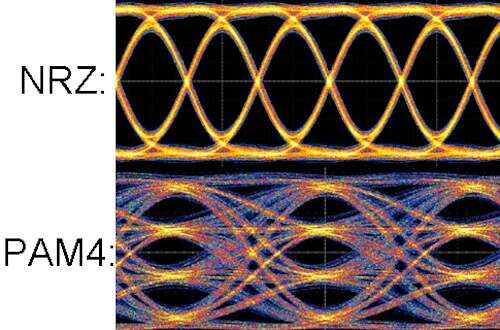
Ethernet is the most popular communication protocol used for computer networks today. In Ethernet communication, information is broken down into small packets and then sent from a node (usually a computer) out to the network.
These packets are re-assembled at the target into the original message. Current Ethernet speeds can reach 1000 Gbps, or 1000 million “1”s and “0”s per second.
Looking for a quick and easy way to clean up that cable mess you put on your “To-Do” list? Let CABLExpress give you a few pointers. Copper Trunking is the latest and greatest way to run CAT5e and CAT6 cabling through your Data Center as well as network closets. The simple idea behind Copper Trunking are the factory terminated ends to create an easy installation process, when the bundled cabling is used in conjunction with a modular patch panel system it cuts down on install time by 80%. Since the 110 punchdowns are done for you in our factory, excellent time and cable management are going to be a great benefit. You can choose from a multitude of options to pick the right trunk for your data center.
So what is a copper trunk?
A copper trunk is a preterminated copper bundle held together by a durable sheathing for quick adds, moves and changes within your Data Center. The trunk makes it easy to pull through racks, cabinets, under or above the floor or ceiling. You can choose from riser or a plenum rated jacket, CAT5e or CAT6, staggered ends for extra cable management in a row, and we can build virtually any length! Start planning today and get CABLExpress involved. If you are confused about length let us know and we can assist. Measure from each point that the copper trunk will be running through and always add 10% for bend radius and corners! Contact anyone on the CABLExpress team today and find out how you can save time and money in your Data Center.
To get a better idea how to apply / measure a copper trunk check out this YouTube video.
Capacitance is an electrical property that refers to the capability to store an electrical charge. A capacitor is constructed of two conductive materials separated by an insulator, or dielectric.
Capacitance is a concern in cabling, because all cables are, in a way, long capacitors. This can affect the signal that is being transmitted down the cable, so manufacturers seek to control capacitance in a variety of engineering techniques.
When it comes to fiber optic trunking, there are two major options for overall construction loose tube (round) or ribbon (square). We believe that the loose tube construction is the bestoverall for most cabling applications. The design lends itself to distinct advantages that make the choice clear to us.
The loose tube construction, being round, can bend on 3 axis points (any which way). The ribbon cable, because of its square nature, has a preference to bend on axis only. If bent on the “unnatural” axis, heavy insertion loss occurs which can lead to a myriad of problems on the network. This also makes routing very difficult at times, and forces the installer to bend on the unnatural axis. Loose tube design bending on 3 axis allows easy cable routing and takes away the danger of insertion loss due to improper bending. Due to the round shape, the loose tube construction will displace crush force much more efficiently than the ribbon.
Years ago ribbon cable first boasted the highest density of fibers. This is no longer the case, as now most loose tube designs boast a 25% smaller footprint than ribbon designs.
In this edition of CABLE Talk Josh and Brittney demonstrate the advantages of preterminated copper trunking. In addition Brittney discussed how to properly measure trunking in your data center.
Plenum-rated cables have been around for a long time. These are cables that are built with a jacket material that is designed to give off low amounts of smoke and toxic gas, and retard flame travel. Recently, new jacket materials have been developed with the description, Low Smoke/Zero Halogen, or LSZH. These new cables give off even fewer toxic and caustic fumes than plenum-rated cables. They are not currently found in widespread use in North America, with applications limited mostly to government, military, and aerospace industries.
Historically one of the most common expansion interface found on PC motherboards was the PCI slot. PCI stands for Peripheral Component Interconnect. The technology was developed by Intel in the early 1990’s, and it quickly became a standard throughout the industry due to its advantages over other motherboard interfaces such as ISA and VLB.
The newest evolution in expansion interface technology is PCI Express, which uses different signaling and physical connections than PCI. PCI Express has effectively replaced the PCI standard.
Ever Wonder… Why BNC connections are preferred over RCA plugs in professional video applications?
There are a couple of strong reasons. First, BNC connectors allow for much tighter control over impedance than RCA connectors. This results in a more stable picture image. Second, the twist & lock mechanism of a BNC makes it very difficult to be jarred loose accidentally. This is especially important in patching applications where A/V engineers and technicians may be working in close quarters with several “hot” video feeds.